You’re sitting in your OB’s office — maybe it’s your 11-week visit, maybe you’ve just seen your baby’s heartbeat on ultrasound for the first time — when she says the words that change everything: “high-risk pregnancy.” Suddenly you have a hundred questions and don’t know where to start. What does it actually mean? Do you need a different doctor? Will you be in the hospital every week? We see that uncertainty every day in our practice, and we want you to know: you are not alone, and you have come to the right place.

Here’s what we’ve found after years of caring for high-risk patients across Los Angeles: the diagnosis itself is not a verdict. It’s a signal that your pregnancy needs closer attention, more specialized monitoring, and a care team that knows exactly what to watch for. We understand pregnancy can be a vulnerable, anxious time — which is why, at our practice, we treat every patient as a VIP, with the concierge, personal-touch care that makes a genuinely difficult time feel supported rather than overwhelming.
Dr. Steve Rad trained at UCLA and Cedars-Sinai, completed his MFM fellowship at Cedars-Sinai, and has been named one of Los Angeles’ Best Maternal-Fetal Medicine specialists by Los Angeles Magazine six years running. Most high-risk pregnancies result in healthy babies and healthy mothers when managed by a team with that level of expertise.
This guide walks you through the most common risk factors by category, explains the difference between an OB/GYN and a maternal-fetal medicine (MFM) specialist, and shows you what a proactive, closely monitored care plan looks like in practice. Los Angeles has some of the most experienced perinatology teams in the country — and navigating that landscape is exactly what we’re here to help you do. If you’ve just received a high-risk diagnosis, you’ll leave this page knowing exactly what to ask and who to call. If you’re looking for specialist guidance right now, you can schedule a maternal-fetal medicine consultation to get answers specific to your situation.
What Does ‘High-Risk Pregnancy’ Actually Mean?
A high-risk pregnancy is one in which the mother, the fetus, or both face a greater-than-average chance of complications before, during, or after delivery. The classification doesn’t mean something will go wrong — it means the pregnancy requires closer monitoring, more frequent assessments, and often a specialist alongside your regular OB/GYN. One of the first things we encourage newly diagnosed patients to do is explore our high-risk pregnancy conditions page, which provides a full overview of the specific diagnoses we manage and can help you feel more informed and less alone from day one.

According to the National Institute of Child Health and Human Development, risk factors include pre-existing health conditions, maternal age, lifestyle factors, and complications that arise during pregnancy. The key word in all of this is “monitoring.” A high-risk classification is essentially a care protocol, not a prognosis.
What most patients don’t realize is that high-risk pregnancy exists on a spectrum. A 36-year-old woman with well-controlled blood pressure and no other complications sits at a very different point on that spectrum than a woman carrying triplets with a history of preterm labor. Both are technically high-risk. But the intensity of care, the frequency of visits, and the specialists involved will look completely different. Understanding where you fall on that spectrum is the first and most important step.
Pre-Existing Conditions That Can Make a Pregnancy High-Risk
Conditions you had before becoming pregnant are among the most common drivers of a high-risk classification. These don’t disqualify you from a healthy pregnancy — far from it. With the right specialist, the right monitoring, and a care plan built around your specific situation, the vast majority of women with pre-existing conditions go on to deliver healthy babies. What they do require is careful co-management between your OB/GYN, your MFM specialist, and often the physician who manages your underlying condition, supported by state-of-the-art diagnostic tools and 24/7 access to your care team.
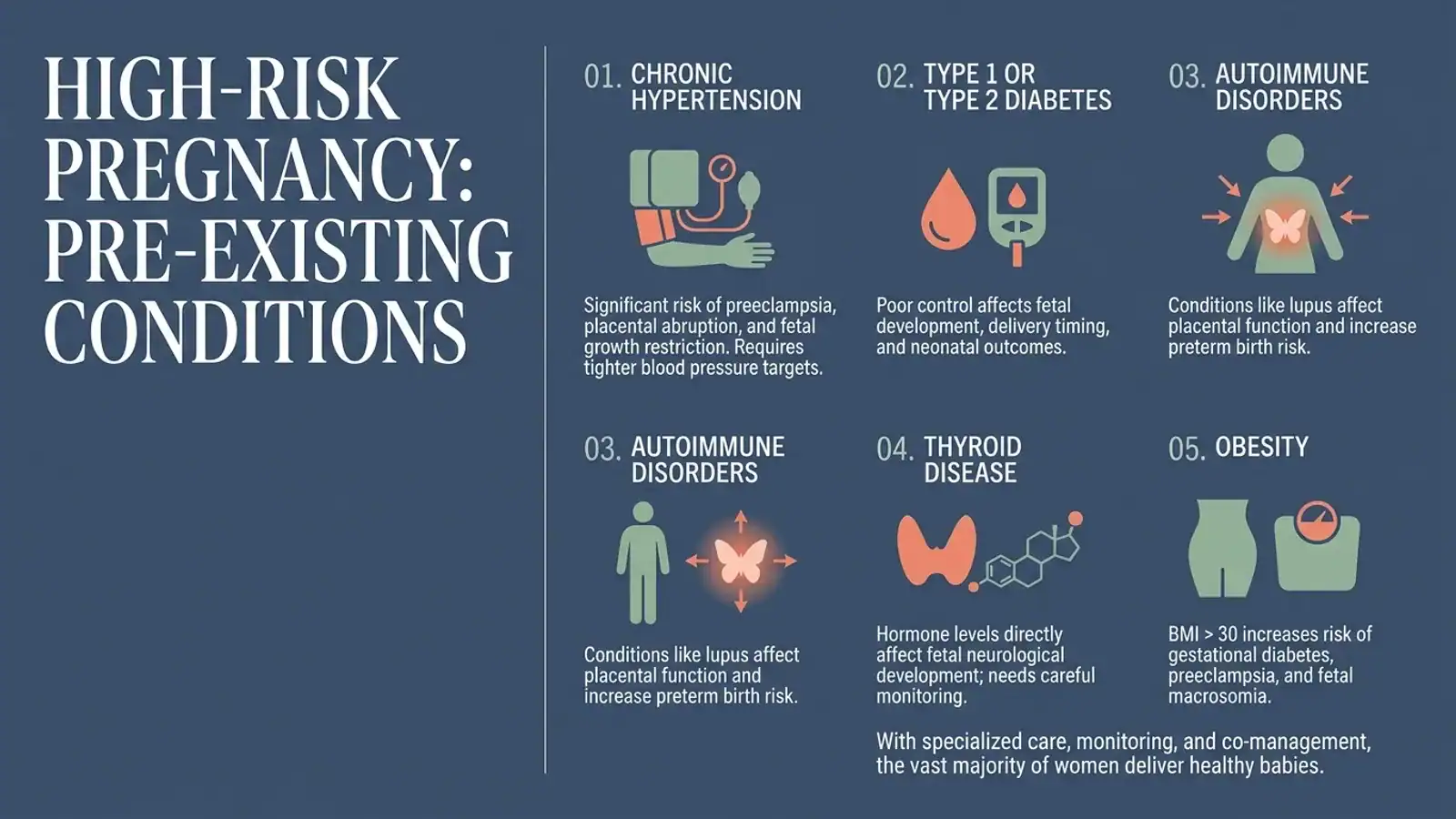
The most frequently seen pre-existing conditions in our practice include:
Chronic hypertension: High blood pressure before pregnancy significantly raises the risk of preeclampsia, placental abruption, and fetal growth restriction. Blood pressure targets during pregnancy are tighter than outside of it, and we monitor closely using cutting-edge maternal assessment protocols.
Type 1 or Type 2 diabetes: Poorly controlled blood sugar in the first trimester is associated with fetal cardiac and neural tube defects. Management throughout pregnancy affects fetal size, delivery timing, and neonatal outcomes.
Autoimmune disorders: Conditions like lupus, antiphospholipid syndrome, and rheumatoid arthritis can affect placental function and increase the risk of preterm birth and fetal growth restriction.
Thyroid disease: Both hypothyroidism and hyperthyroidism require careful monitoring during pregnancy, as thyroid hormone levels directly affect fetal neurological development.
Heart or blood disorders: Structural heart conditions, clotting disorders, and anemia all require specialist oversight to prevent maternal and fetal complications.
Obesity: A pre-pregnancy BMI above 30 increases the risk of gestational diabetes, preeclampsia, cesarean delivery, and fetal macrosomia.
History of uterine surgery: Prior cesarean sections, myomectomies, or other uterine procedures can affect placental implantation and increase the risk of uterine rupture or placenta previa.
Our renowned team uses state-of-the-art imaging — including cutting-edge 3D and 4D high-definition ultrasound and early fetal scans — to monitor these conditions with a level of detail that standard prenatal care simply cannot match. You’ll never feel like a number here. That personal touch, combined with specialist-level expertise, is the Dr. Rad difference.
Age and High-Risk Pregnancy: What the Numbers Really Mean
Maternal age is one of the most discussed risk factors, and also one of the most misunderstood. The clinical thresholds are under 17 and over 35, but the risks at each end of that range differ in nature.
Pregnancies in women under 17 carry elevated risks of preeclampsia, anemia, and preterm birth, partly due to physiological immaturity and partly due to socioeconomic factors that affect access to prenatal care. These pregnancies benefit from close monitoring and strong social support structures.
Advanced maternal age (AMA), defined as 35 or older at delivery, is far more common in Los Angeles than the national average. Many of our patients are accomplished professionals who delayed childbearing, and they come to us well-informed and highly motivated. What AMA actually means clinically: the risk of chromosomal abnormalities like Down syndrome increases with age, which is why we routinely offer cell-free DNA (cfDNA) testing and nuchal translucency ultrasound as core components of our early fetal scans for AMA patients — tools that can detect chromosomal concerns as early as 11 to 13 weeks of gestation. The risk of gestational diabetes, preeclampsia, placenta previa, and cesarean delivery also rises with age, as does the risk of pregnancy loss — modestly after 35 and more significantly after 40. A detailed anatomy scan and close perinatology follow-up are standard parts of every AMA care plan in our practice.
Consider a patient we cared for recently: a 38-year-old first-time mother referred to us after her OB noted elevated blood pressure at her 16-week visit. She had no prior health conditions and had assumed her pregnancy was straightforward. After a detailed evaluation — including early fetal scans and a full maternal assessment using our state-of-the-art 3D/4D ultrasound — we identified early signs of placental insufficiency. With close monitoring every two weeks and a modified activity plan, she delivered a healthy baby girl weighing 6 lbs 2 oz at 38 weeks with no acute complications. The outcome was good because we identified the risk early and managed it proactively—not because the risk wasn’t real. That is the Dr. Rad difference.
Risk Factors That Develop During Pregnancy
Not every high-risk pregnancy starts that way. Some of the most significant complications arise in women who had no pre-existing conditions and no obvious risk factors at the start. This is one of the most important things to understand: a healthy woman absolutely can become high-risk during pregnancy, and it can happen quickly.
We think of a patient we saw not long ago — a 32-year-old in her second pregnancy, no prior complications, referred to us at 24 weeks after a routine OB visit flagged elevated blood pressure and protein in her urine. She told us she’d felt fine. Within a week of her first visit with us, we had confirmed early-onset preeclampsia and put a detailed monitoring plan in place. She delivered at 35 weeks — earlier than any of us wanted, but safely, with a healthy baby boy in the NICU for just under three weeks before going home. She told us afterward that what helped most wasn’t just the clinical expertise — it was knowing she could reach us at any hour and that someone was watching closely. That is the Dr. Rad difference.
The most common pregnancy-specific complications we manage include:
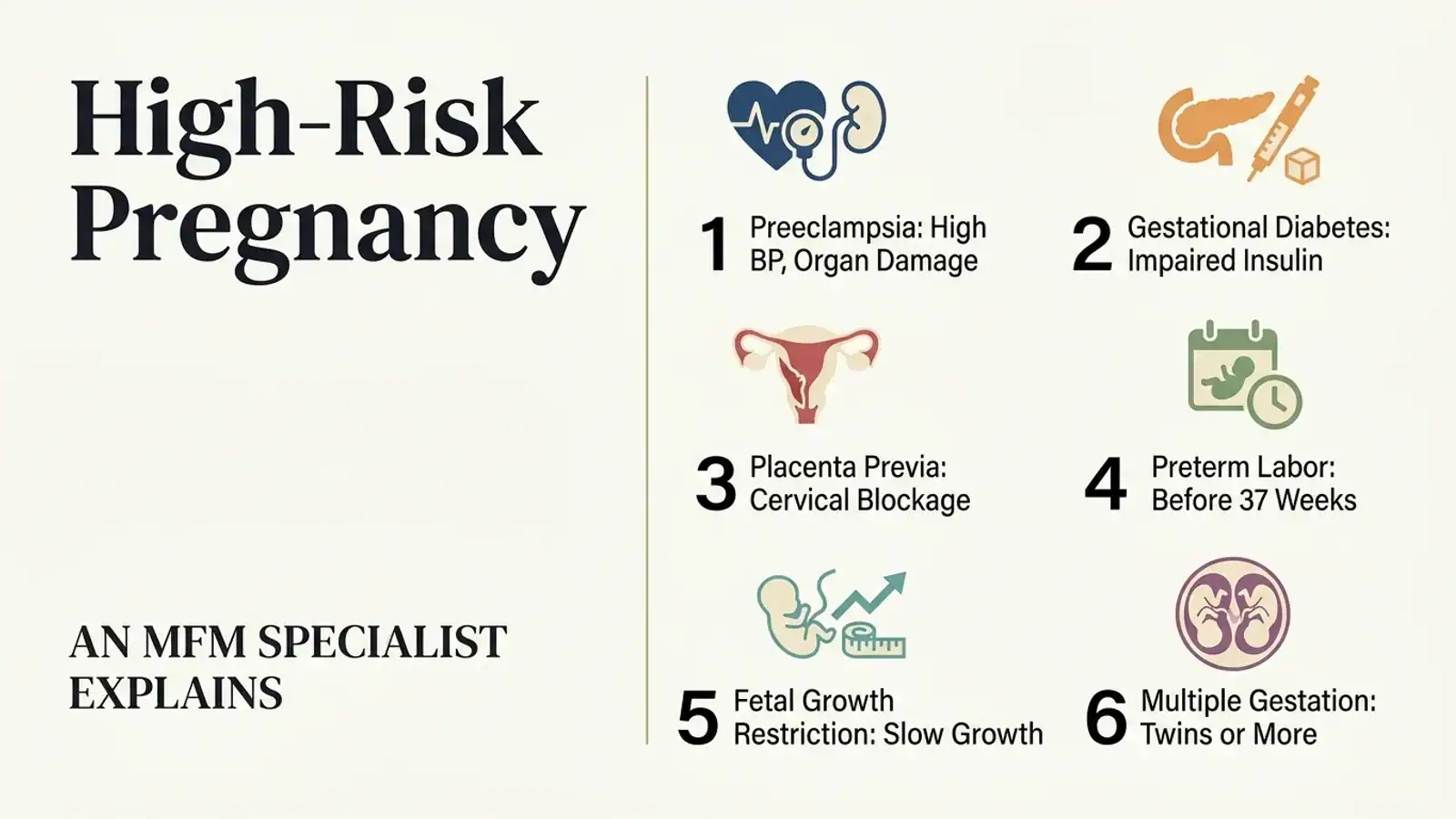
Preeclampsia: A condition characterized by high blood pressure and signs of organ damage, typically developing after 20 weeks. It affects roughly 5 to 8 percent of pregnancies and can progress rapidly to severe complications including seizures (eclampsia) and HELLP syndrome. Early detection through blood pressure monitoring and urine protein testing is critical.
Gestational diabetes: Develops when pregnancy hormones impair insulin function. It typically appears in the second trimester and is managed through diet, exercise, and sometimes medication. Uncontrolled gestational diabetes increases the risk of fetal macrosomia, birth injury, and neonatal hypoglycemia.
Placenta previa: A condition in which the placenta partially or fully covers the cervical opening. It causes painless vaginal bleeding and typically requires cesarean delivery. Many cases of low-lying placenta identified early in pregnancy resolve on their own as the uterus grows.
Preterm labor: Labor that begins before 37 weeks. Risk factors include prior preterm birth, cervical insufficiency, multiple gestation, and infection. Monitoring cervical length via ultrasound is a key tool in identifying women at risk before symptoms appear.
Fetal growth restriction (FGR): When the fetus is not growing at the expected rate, often due to placental dysfunction. Regular growth ultrasounds and Doppler blood flow studies track severity and guide delivery timing decisions.
Multiple gestation: Twin, triplet, or higher-order pregnancies carry significantly elevated risks of preterm birth, growth discordance, twin-to-twin transfusion syndrome (in identical twins), and maternal complications including preeclampsia.
Can a healthy woman suddenly become high-risk during pregnancy?
Yes, and this happens more often than most patients expect. Preeclampsia, for example, can develop in women with no prior history of high blood pressure and no identifiable risk factors. Ultrasound often identifies placenta previa, often as a surprise finding. Gestational diabetes can develop in women with normal pre-pregnancy blood sugar. This is precisely why prenatal monitoring exists: not just to track known risks, but to catch new ones as they emerge. If you’re currently low-risk, that’s not a reason to skip appointments or reduce monitoring. It’s a reason to stay engaged with your care.
Lifestyle and Environmental Factors That Elevate Risk
Beyond medical conditions and age, certain lifestyle and environmental factors meaningfully increase pregnancy risk. These are worth discussing honestly because they are often modifiable—and addressing them early can significantly shift a pregnancy’s trajectory. In our concierge practice, we have these conversations at your first visit, not as an afterthought.
Smoking during pregnancy is associated with placental abruption, preterm birth, low birth weight, and sudden infant death syndrome (SIDS). The risk is dose-dependent — there is no safe level of smoking during pregnancy — and cessation at any point in the pregnancy improves outcomes. We connect patients with cessation support as part of their care plan.
Alcohol carries no established safe threshold during pregnancy and is associated with fetal alcohol spectrum disorders, which range from subtle learning and behavioral differences to significant physical and cognitive impairment. The American College of Obstetricians and Gynecologists recommends complete abstinence throughout pregnancy.
Substance use, including opioids, stimulants, and cannabis, creates significant risks for both maternal health and fetal development. Opioid use during pregnancy is associated with neonatal abstinence syndrome, preterm birth, and fetal growth restriction. Cannabis use — increasingly normalized in California — is associated with low birth weight and adverse neurodevelopmental outcomes; it is not safe during pregnancy regardless of how it is consumed.
Obesity — a BMI over 30 at the start of pregnancy — is one of the most common modifiable risk factors we see in Los Angeles. It increases the risk of gestational diabetes, preeclampsia, cesarean delivery, fetal macrosomia, and stillbirth. When possible, weight management before conception is one of the most impactful steps a woman can take to reduce her overall pregnancy risk profile. We work with patients on this proactively, often before they conceive.
Environmental exposures are an increasingly recognized contributor to adverse pregnancy outcomes — and in Southern California, this is not a theoretical concern. A large cohort study of over 250,000 pregnancies in Southern California (2008–2018), published in Environmental Health Perspectives, found that maternal exposure to ambient air pollution mixtures was associated with significantly elevated rates of premature rupture of membranes. Separately, a UC Irvine–led study found that wildfire smoke exposure during pregnancy was linked to higher rates of preterm birth, with disparities in risk across communities. In a region where air quality varies significantly by neighborhood, season, and fire conditions, this is a relevant and real consideration for our patients. We discuss environmental exposure history at every new patient intake.
Prior pregnancy history also matters more than many patients realize. A history of miscarriage, preterm birth, cesarean delivery, or a prior baby with a chromosomal or structural abnormality all elevate risk in subsequent pregnancies and warrant specialist involvement from early in the pregnancy — ideally before conception, so a proactive perinatology plan can be in place from the start.
When Should You See a Maternal-Fetal Medicine Specialist Instead of Your OB/GYN?
We understand that pregnancy can be a vulnerable and anxious time — and one of the most disorienting parts of a high-risk diagnosis is not knowing who you’re supposed to call. This is the question most patients don’t know to ask, because most patients don’t know that maternal-fetal medicine exists as a distinct subspecialty. Here’s the clearest, most reassuring way to understand the difference.
An OB/GYN is trained to manage the full spectrum of normal and moderately complicated pregnancies. They are your primary prenatal care provider and the physician who will typically deliver your baby. A maternal-fetal medicine specialist — also called a perinatologist — is an OB/GYN who completed an additional three-year fellowship specifically focused on high-risk pregnancies, complex fetal conditions, and advanced diagnostic procedures including early fetal scans and fetal echocardiograms. Where your OB provides continuity and relationship, your MFM specialist brings a deeper layer of subspecialty expertise. The two work together as a team — and at our practice, you’ll feel the benefit of both, with the personal touch and 24/7 access that is the Dr. Rad difference.
We treat all of our patients as VIPs. That means you should never feel like you have to wait weeks for answers or navigate a confusing referral process alone. You should consider seeing an MFM specialist if any of the following apply — and if you’re unsure, reaching out early is always the right call:
You have a pre-existing condition that affects pregnancy (diabetes, hypertension, autoimmune disease, cardiac conditions)
You are 35 or older, particularly if this is your first pregnancy or you have additional risk factors
You are carrying multiples
A prenatal screening test has returned an abnormal result
Your OB has identified a concern on ultrasound, including fetal structural findings
You have a history of pregnancy loss, preterm birth, or a prior baby with a chromosomal or structural abnormality
You simply want the reassurance of a specialist’s eyes on your pregnancy — that is always a valid reason
In our experience, patients who advocate for themselves and ask for an MFM consultation early — rather than waiting for a referral — tend to have better-informed care plans and feel more confident throughout their pregnancy. Navigating those resources, especially when you’re anxious and newly diagnosed, is not something you should have to do alone. That’s exactly what our concierge perinatology practice is here for.
What Does Close Monitoring Look Like for a High-Risk Pregnancy?
When patients hear “close monitoring,” they often picture a stressful schedule of weekly hospital visits. The reality, particularly with a concierge MFM practice, is more nuanced and far more manageable than that image suggests.
Monitoring for a high-risk pregnancy typically includes more frequent prenatal visits (every one to two weeks rather than every four weeks in the third trimester), serial ultrasounds to track fetal growth and amniotic fluid levels, and additional testing tailored to the specific risk factor. For a patient at risk for preeclampsia, that means regular blood pressure checks and urine protein monitoring. For a patient with gestational diabetes, it means blood sugar logs and growth scans every three to four weeks. For a patient with a fetal cardiac concern, it means a fetal echocardiogram, a specialized ultrasound that evaluates the structure and function of the fetal heart.
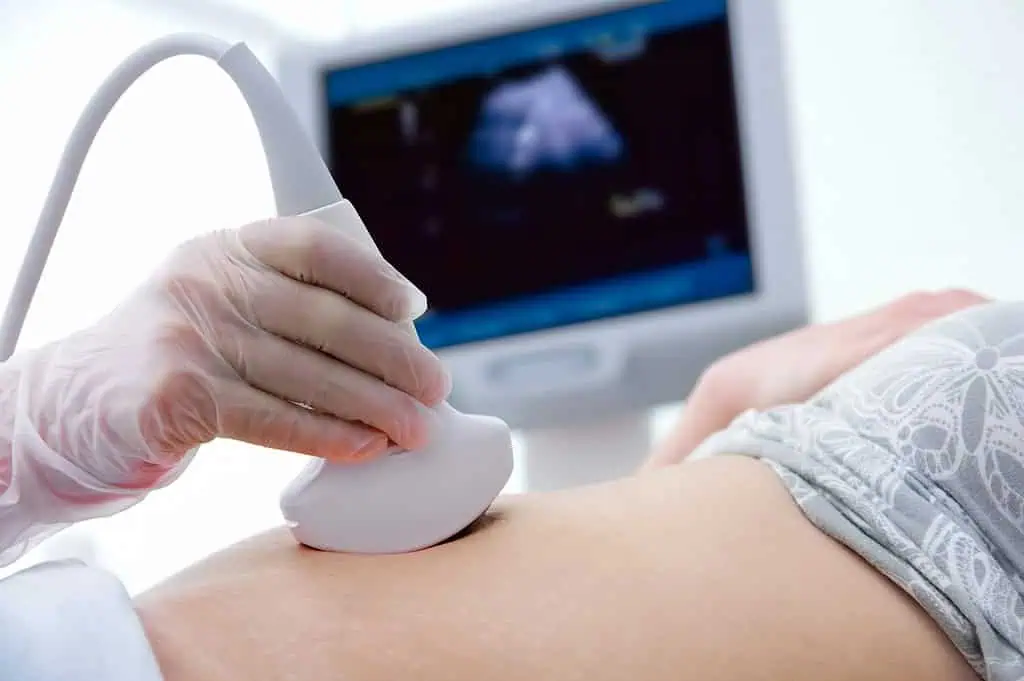
At Dr. Rad’s practice, we use GE 3D/4D high-definition ultrasound technology, available in only a few places worldwide, to provide imaging detail that standard 2D ultrasound simply cannot match. This matters clinically: subtle structural findings that might be missed on standard imaging are visible with this technology, and early detection changes outcomes. Learn more about our advanced ultrasound monitoring for high-risk pregnancies and what to expect during these exams.
One of our patients, a woman in her late thirties carrying twins after IVF, came to us at 14 weeks after her fertility clinic flagged a potential cardiac finding on one twin. Using our 3D/4D fetal echocardiogram capability, we confirmed a ventricular septal defect at 16 weeks, coordinated a referral to a pediatric cardiologist before delivery, and ensured the neonatal team was prepared at birth. The baby required a procedure at three months of age and is now thriving. That outcome was possible because the team diagnosed early, used the right technology, and knew what to do with the information.
How often do high-risk pregnancies need monitoring?
Monitoring frequency depends entirely on the specific risk factor and how the pregnancy is progressing. A woman with well-controlled gestational diabetes and no other complications might be seen every two to three weeks with growth scans every four weeks. A woman with severe preeclampsia or significant fetal growth restriction might need twice-weekly non-stress tests and weekly ultrasounds. There is no single answer, and any care plan that doesn’t account for the individual patient’s situation is not a good care plan. The goal is to monitor closely enough to catch changes early, without creating unnecessary anxiety or disrupting daily life.
Navigating a High-Risk Pregnancy in Los Angeles: Your Next Steps
Receiving a high-risk diagnosis in Los Angeles puts you in a city with world-class medical resources, but navigating those resources, especially when you’re anxious and newly diagnosed, is not always easy. Here is a practical framework for what to do next.
Step 1: Clarify your specific risk factor. Ask your OB exactly what is driving the high-risk classification. Is it a pre-existing condition, something identified on a screening test, or a complication that has developed? The answer shapes everything that follows.
Step 2: Request an MFM consultation. Even if your OB feels confident managing your care, a consultation with a maternal-fetal medicine specialist gives you a second expert perspective and access to advanced diagnostic tools. In many cases, the MFM specialist and OB co-manage the pregnancy together. This is not a sign that something is terribly wrong. It is standard of care for high-risk pregnancies.
Step 3: Understand your monitoring plan. Before you leave any appointment, you should know: how often you’ll be seen, what tests are scheduled and when, what symptoms should prompt you to call immediately, and who to call after hours. A care plan you don’t understand is not a care plan you can follow.
Step 4: Consider whether your care model fits your life. High-risk pregnancies require more frequent contact with your care team. For many Los Angeles patients, the logistics of frequent clinic visits, parking, traffic, and time away from work or other children create real barriers to consistent care. Our concierge at-home prenatal care for high-risk patients was designed specifically for this reality. We offer home visits, office visits, telemedicine, and travel visits, available 24/7, so the frequency of monitoring your pregnancy requires doesn’t become an added source of stress.
Step 5: Build your support system. High-risk pregnancy is not just a medical experience. It is an emotional one. Anxiety, fear, and uncertainty are normal responses to this diagnosis. Connecting with a therapist who specializes in perinatal mental health, a support group for high-risk mothers, or simply a care team that takes the time to explain and reassure makes a measurable difference in how you experience the pregnancy and, research suggests, in outcomes as well.
We treat all patients as VIPs, ensuring you feel cared for and supported at every step. That is the Dr. Rad difference: not just clinical expertise, but the kind of personal attention that makes a genuinely difficult situation feel manageable. Peers have selected Dr. Rad as Los Angeles’ best Maternal/Fetal specialist six years in a row in LA Magazine, and as a Southern California Rising Star for four consecutive years. That recognition reflects not just technical skill but the experience of patients who felt genuinely seen and supported through their high-risk pregnancies.
Trust Dr. Steve Rad for the best care after a high-risk diagnosis
If you’ve just received a high-risk diagnosis and you’re not sure what your next step should be, the most important thing you can do right now is talk to a specialist who can evaluate your specific situation. Schedule a maternal-fetal medicine consultation with Dr. Rad and get a clear, personalized plan for your pregnancy.
Frequently Asked Questions About a High-Risk Pregnancy Diagnosis
What factors make a pregnancy high-risk?
A pregnancy is classified as high-risk when any factor, whether maternal, fetal, or related to the pregnancy itself, increases the likelihood of complications above the baseline population risk. The main categories are pre-existing maternal health conditions (such as diabetes, hypertension, autoimmune disorders, and cardiac disease), maternal age (under 17 or 35 and older), pregnancy-specific complications that develop during gestation (such as preeclampsia, gestational diabetes, placenta previa, and fetal growth restriction), lifestyle factors (smoking, substance use, obesity), and obstetric history (prior preterm birth, recurrent pregnancy loss, prior cesarean delivery).
Multiple gestation, meaning twins or more, is also a near-universal trigger for high-risk classification. According to the Mayo Clinic, any one of these factors warrants closer monitoring and often specialist involvement.
What makes a woman high-risk in pregnancy?
A woman is considered high-risk in pregnancy when her personal health profile, age, or pregnancy circumstances create an elevated likelihood of complications for herself, her baby, or both. This includes chronic conditions she had before becoming pregnant, conditions that develop during the pregnancy, her age at delivery, her obstetric history, and certain lifestyle factors.
The classification is not a judgment about her health or her choices. It is a clinical signal that her pregnancy requires a higher level of monitoring and, in many cases, the involvement of a maternal-fetal medicine specialist alongside her regular OB/GYN. The goal of the high-risk designation is to ensure that the right resources are in place before complications arise, not after.
What is perinatology and how does it differ from standard OB care?
Perinatology is the subspecialty of obstetrics focused on the diagnosis and management of high-risk pregnancies and fetal conditions. A perinatologist, also called a maternal-fetal medicine specialist, completes standard OB/GYN training plus an additional three-year fellowship in high-risk obstetrics, advanced fetal imaging, and complex obstetric procedures.
Where a standard OB/GYN manages the full spectrum of prenatal care and delivery, a perinatologist focuses specifically on cases where the risk profile requires advanced expertise. In practice, many high-risk patients are co-managed by both: the OB handles routine prenatal care and delivery planning, while the MFM specialist provides consultations, advanced imaging, and management of the specific complication driving the high-risk classification.